Search This Blog

Wednesday, 4 May 2011

Elements of game design: Environment

The environments in games are one of the main key elements, it is the world you see and play through, and they have great impact on the gameplay. Not only should the environment be affecting the atmosphere of the game, but it also plays a big part in the gameplay itself. For instance, a large open world which you can explore freely will be the right sort of environment for an RPG or a sandbox style game. On the other hand, a realistic FPS game will have closed in environments, with buildings and streets where you can hide and take cover etc.
Generally, in levels, the designers construct them to lead you through the level. They are built in ways that perhaps are realistic and recognisable, so that you would know where to go, or at least be able to figure out where to go. They have to be built and decorated in some form of logical way, so that you can understand the environment and be able to travel through it and explore.
For the player to believe in the game world, I think there should be a balance between realism and stylisation. Obviously, for the game to be unique and for the world to be unique, it will have to be stylised in some way. But for it to be believable, some realistic qualities will be needed as well.
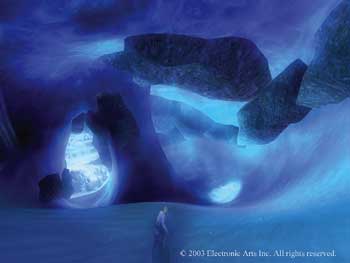
Some games can feel very enclosing. I remember playing SSX3, a snowboarding game. It had really cool and beautiful mountain environments, which you could explore to some extent. And that is where the problem was, I always used to end up going out of bounds, which causes you to reset. I always hated that, thinking that there could be so much more to explore in that direction, yet you have to stick to a certain line down the mountain. Sure, there were shortcuts, and some levels were pretty open, but it never takes long to get to the edge of play. And I think this greatly diminished the freedom aspect of the gameplay. Of course, in races, there has to be limits, but when playing on FREERIDE, you should have more to explore. Even sometimes you can be playing, and right in the middle of a trick, and without knowing that you are anywhere near the boundary, you suddenly respawn.
The environments in Dead Space were very cleverly designed to affect the gameplay experience. There were many people involved in the making of the environment, so I will just list some of the main roles. Yang Cai, Ernesto Guaman, Jian Fie Wang are all environment artists. Jonathan Hackett and Chi Wai Lao were the senior environment artists and Thomas Holt was the environment art lead. Being a futuristic survival horror kind of game, the corridors of the ship were dark and confined. It makes it seem very claustrophobic. The lights in some areas would suddenly turn off, leaving you in darkness for a moment, causing you to head towards any light. But it was not the same confined corridors all the time. There were some contrasting open areas, which were a welcome experience, such as the zero gravity zones and also times when you are out in space itself. This helped to define how big the ship really is, while also making you feel as though you will get lost. I think the designers got a lot of their inspirations from classic sci-fi horror films like Alien, and the sequels. Especially with the way futuristic ships are portrayed. Also, I would imagine that they looked at current space facilities and ships, like at NASA to get their ideas for specific things like control rooms, pipes and tech that is in corridors etc.

Tuesday, 3 May 2011

Films: “The Thing” and “Blade Runner”


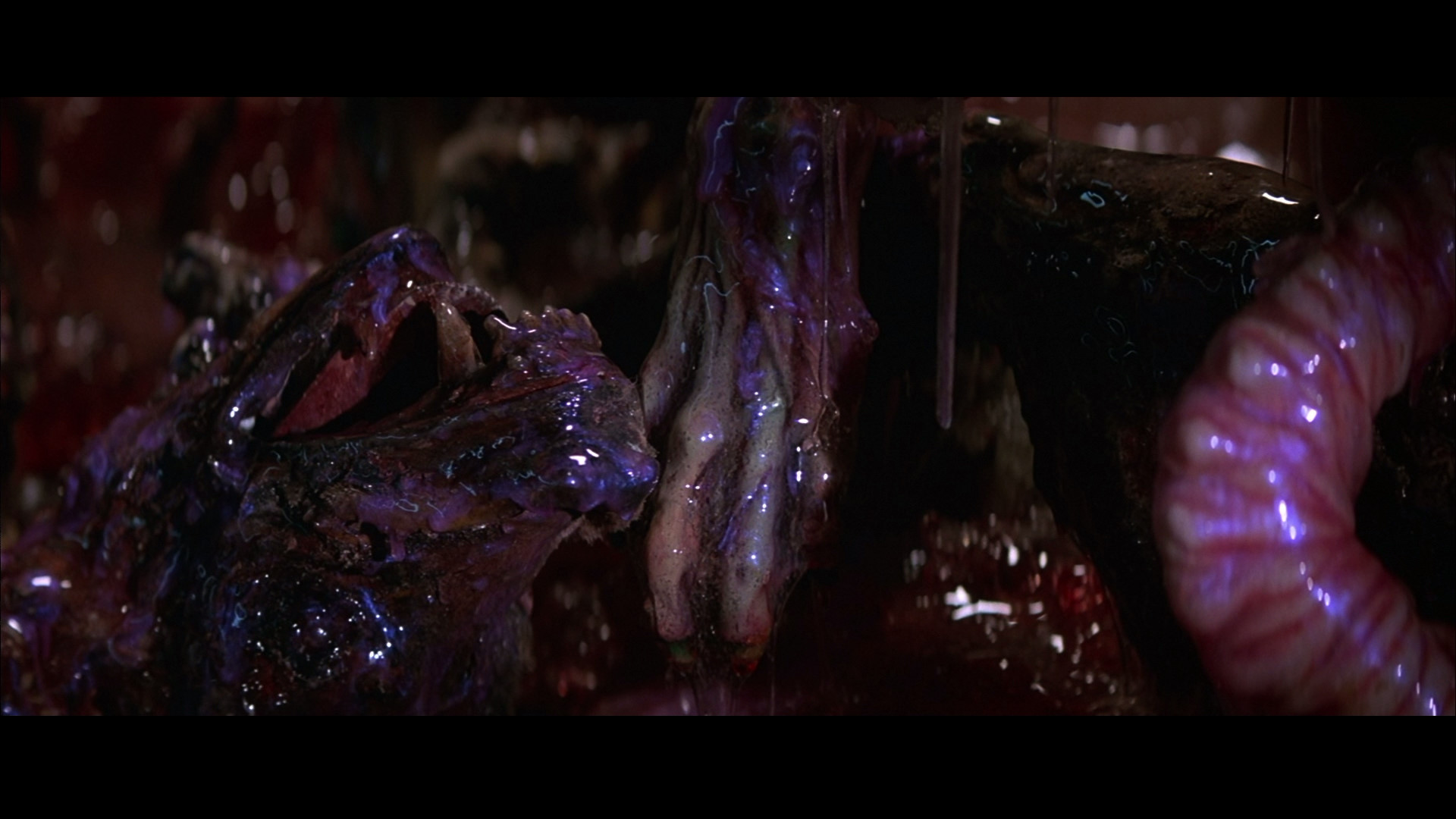
These two films are ones I had seen when I was a lot younger. But I don’t think I saw them all the way through before though. The Thing is a really good classic horror film by John Carpenter. It scared the hell out of me the first time I saw it! I absolutely hate the dog scene. But after seeing it again, I can appreciate the skills of the artists and modellers in making the creature effects. There were a few scenes where we laughed our heads off, but definitely can’t deny that it’s a good film! I heard that there is going to be a remake of the film, but the monsters will be done in CGI. Somehow I think that will lose its effect. You can beat the originals anyway, or at least rarely do you see that. Creature effects done with modelling and suits etc are really quite awesome. I’ve seen the making-of videos for films like Underworld and The Cave. In Underworld, they hand made all the werewolf suits, and the fur on them was individually poked into the latex skin! And in The Cave, the creatures were totally unique, with great details in the features and skin tones.

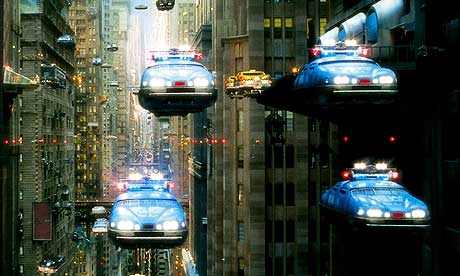
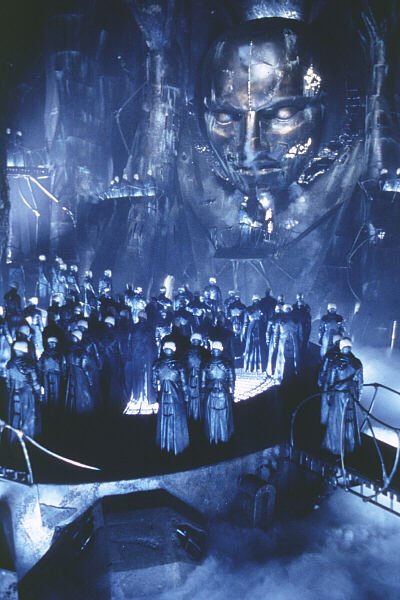
Blade Runner was also one I had watched when I was small, but never all the way through. I had never seen the ending, so it was good to finally see it. I thought that this film had a very interesting portrayal of the future. It was more of a dystopian future, with crowded busy and run down streets. You get the feeling that it’s an unsafe urban environment, and likely with a corrupt government. The story was quite interesting. The idea of robots walking among us has been used a lot of times, but it was interesting how the robots had some form of feelings, and wanted to protect themselves. I thought it was a very good idea to have the film based on a person who hunts down these robots. The city itself, with its huge futuristic buildings was quite amazing and unique. Films like The Fifth Element had similar buildings, and perhaps they took their inspiration from this older film.

Monday, 2 May 2011

Personal Review of the first year!

 
I’m really happy with my progress so far. The first year has been great, I’ve learnt a lot and it has been brilliant in opening my eyes to what the game industry is really like. I remember at the start of the year when we were thrown right into 3dsMax! I thought this was a great approach and I think giving us a modelling task, the Dalek, to do pretty soon was a good way to get us into learning the program. I knew we were going to be using it a lot and so I wanted to have a good look at it and get the feel for model making. Obviously at first I was a bit daunted, but I was willing to learn and quickly got the hang of the basic tools. Looking back, I can remember when I struggled with setting up reference images! By now, its second nature!

I can remember the first day we went out drawing down at the canal. I thought that was a pretty great start to Visual Design. Learning about perspective viewpoints and vanishing points is a really important part for pretty much all drawing. Also, I was glad that one point perspective was first, because it had been a while since I had done it and I really needed to practice it again. Throughout the visual design module, I could see the gradual improvements in my drawings. When I see the start of my first sketch book to the end, I am really happy with the improvements and what I learnt and developed the first year. I also really enjoyed it when we went out into Leicester to draw somewhere. I thought that it was a good part of the course, because it got us outside, and also a lot of people would assume that a game art course would involve just computers, so it was nice to draw things from actually being their in life. The trip to Bradgate Park was one of the highlights for me. I really loved the area and there was so much to draw! One of the reasons I liked it was that it reminded me of Scotland, where I had lived for 3 years. The terrain was similar to the highlands. It’s definitely a good part of the course, and I guess the only thing I would have liked to have is more information given to us about getting there.

I enjoyed Critical Game Studies as well. It was fun to get to discuss the elements of games. And it was interesting to write about my thoughts on different topics. I learnt a lot from the gaming history tasks. It was great learning about the very first games, and talking about the different generations of consoles. Also, the tasks on the elements of game design were great in helping me to understand more about the way games are developed, and also helped me to improve on my writing skills. I also really enjoyed having films on Wednesdays. I went to all of them, and I though it was a good way to get us thinking about visuals and how things are directed.

The teaching in general was brilliant! Everyone was really great in teaching us and giving us feedback. I don’t really think I would want to change anything in the way we are taught. I guess the only thing I would say is that I would like it if tutors were available more often. Because a lot of the time we never knew where to find a tutor, and sometimes that’s when we may have wanted to ask something. Obviously I know they can’t be in loads of places at once and are very busy. Generally us students helped each other and communicated a lot through facebook, which was a great help. I thought that was a really good idea making new facebook profiles for just us Game Art students. It’s a great way of communicating and getting feedback and help. It’s also great for showing family and friends the kind of work that is done on the course.

The first year has helped be to become more certain about where I        want to go. So far, I think I’m heading more towards environment design, I think making game environments would be a great area to specialise in. I really enjoyed making trees and I’ve seen some other peoples work on playable levels, and it looks quite appealing. I am still interested in concepting as well, and environment concept art has been one of the main things that first got me interested in game art. Also, the character design task reminded me that I am still quite interested in designing creatures. I’ve always found creatures in games and films really interesting, and love seeing the drawings of how they were made. I did actually think that the gladiator project was going to be extremely hard and that I wouldn’t like making humans much. But actually I found the process a lot of fun. And thinking back to what I was like at the start of the year, and now looking at what I’ve made with the gladiator, I’m really pleased that I was able to do it.

I’m really happy with how much I have learned in the first year. I am going to practice everything I have learned so far, and also start learning more about UDK, since I know we will be using that in the second year. I am really looking forward to the second year, and I can’t wait to see what we will learn and how much more I will improve throughout it.

Films: “I’m a Cyborg, but that’s Ok” and “Angel-A”.

The film, “I’m a Cyborg”, was really interesting and unique. I enjoyed it, even though there were many scenes that were extremely random! But I think that’s part of the fun. It had a very interesting story, with odd but memorable characters. This film had a very colourful environment. A lot of colours were used, and they stood out in certain places. I thought it was cool how the patients in the mental institute were all using their imaginations to escape the place they are trapped in. It was fun how each person had special characteristics and names.

Throughout most of the first half of the film, I kept wondering if the main character really was a Cyborg. It was difficult to know how the film was going to go. But you soon realise that it’s the patients’ imaginations that create a lot of the scenes. The point where the main character turns into robot form and starts shooting everyone was pretty funny and a very odd change to the film, since there was no real violence or anything involving cgi up until then. Overall I thought it was a quite a good film!

I really love “Angel-A”. I thought it was a brilliant film. Great story and was very emotional. It involved a fallen angel, but the film kept everything very down to earth (nice pun there!). Everything was very believable, nothing too far fetched. It had realistic characters and scenes. As you watch, you are waiting for something supernatural to happen to prove that Angela is a real angel. When it finally does happen in the restaurant scene, and Andre witnesses it himself, his reaction is very believable. Great acting from him, and you sympathise a lot with his character throughout the film.

The scene where Angela tries to get Andre to say he loves himself in the mirror was really emotional and quite sad. There were a number of scenes that made me feel sad! The one where Angela refuses to believe that Andre loves her, and she gets upset and tells him exactly who he will meet and where and the children he will have, and that its fate and never can be between them. She shouts at him and its all quite upsetting. But he persists. And the ending of the film, where Angela is suddenly called back to heaven was really dramatic. And I was almost teary at one point during their argument and when Andre kept calling her name when he couldn’t find her. Awesome film, would definitely watch again! And another example of a subtitled film that I thought was just as good as films in English, I don’t think that the language affected the experience of the film at all.

Thursday, 24 March 2011

Elements of game design: Characters

Characters in games are, of course, extremely important. The character you play as is the conduit for which you experience the game itself. You play as that character, you tend to believe that you are them; you therefore take on their roles and motives throughout the game.

For games to be immersive, for them to have the ability to draw the player in and give them a unique experience, they must have forms of emotional attachment to the character they play or other characters that they encounter. If you have sympathetic feelings towards the character, if you can relate to their emotions and motives, you start to believe in the character. They become more real.

Game designers try to make the character you play believable and also relative to you by many different tactics. As you play, they make you feel what the characters feel. They try to get you to feel as confused as they are. Their emotions, by seeing a terrible tragedy happen, or experience some form of betrayal, are meant to be understood by you, the player. You can sympathise with their fear, anger, happiness, and as you get more attached to them, you start to become them. You want the character to succeed, and generally you want to help them to achieve a happy ending.
If the developers can get it so that you always want to see what happens next, like you want to see the characters’ story unfold, then it will be an immersive experience.
The acting and script are important too. There has to be an interesting story, to set the game up, so that you can clearly see the characters goals and motives. What the character says, and how they react to certain situations defines their nature.

To give characters more depth, and make them seem more real, they need to be given interesting histories. Back stories of their past gives us more information about them.
I don’t think the characters have to be necessarily good. Sometimes if the characters have bad ass attitudes, we love them more for it. A lot of games nowadays go for the badass anti hero type of character, possibly because they are more interesting characters than just perfectly good natured characters. Also, their appearance can be important as well. I wouldn’t agree that the character has to be visually appealing, like handsome or pretty, or necessarily cute. Sometimes the characters can be ugly, inhuman, demonised, odd etc and yet that does not reduce the emotional attachment, as long as the story has been carefully set up so that we still are sympathetic towards them.

One common thing in recent games is the near death scenario near the start of the game. For example in Red Dead Redemption, Bulletstorm, Darksiders, Infamous, Prototype, Assassins Creed, Just Cause and many others. This is a common way of starting the story off, and introducing the character to us. Allowing us to play as them for a bit, then suddenly getting killed, or almost killed, it is a way of getting us to want revenge, and understand why the character wants it, because we experienced it along with them. It’s a common starting point for the story line in a lot of games.

I also believe that the voice acting for the characters is very important as well. If they are voiced by good actors, it helps us to understand their attitude and emotions. We can hear tones when they talk with others, or talk to them selves. This makes them seem more real as well.

Wednesday, 23 March 2011

Art Direction


An art director is the person who is in charge of the overall look of the game. They have the vision of the whole games atmosphere. They work closely with the game designer in bringing the vision of the game to life. The look of the world is very important; therefore the Art director’s role is a very big responsibility. They must work with a diverse team of other artists, overseeing their work and communicating closely with them so that the game may be developed in the atmosphere the game is to be set.

Art direction for games is an extremely crucial part of their development. Everything from the environment to the characters must be thought and planned out; they must be designed to fit in with the game in specific ways, to enhance the world and atmosphere in general. Certain levels have to have certain moods, and these can be created by carefully deciding on things like colours, lighting, sounds, textures etc. Will it be a scary moment in the game? What can we do to make the player feel scared? Make it dark; make odd shapes and colours stand out in specific ways to lead their attention. Everything must be thought of and carefully tweaked to get the desired effect.

Art direction in games and films are quite similar. For example, the environments can be designed for a specific purpose, for enhancing the story or setting the stage for a particular event. One difference though is the amount of control the art directors have on the audience/gamers point of view. In films, you can control everything, if you want them to look at a certain building, and make the building look important by changing the camera angle, you can do this in a film. You lead the audience where ever you want, and they have only to watch. Also, there is technically less thinking involved when watching a film. In games however, the art director has to think about how the world is viewed from almost every angle. Of course, some games can have fixed camera angles; let’s not forget Resident Evil and Alone in the Dark! They were very much like films, fixing the camera in clever ways that make rooms look bigger, and corridors more imposing.  But the main difference is that the player has a little more freedom to see what they want to see. Therefore, the art director has to make sure that the mood and settings within the world stay the same no matter where the viewer is looking. Obviously in different areas, it can change for effect.

To be an art director, I think the key skills are communication, leadership, organisational skills. Also, the ability to evaluate others’ work, and give constructive criticism. I think they would be important since as the art director, you will be leading the other artists, communicating and collaborating with them to achieve the overall goal. I think you would have to have these skills, and have a strong team like approach to the project, respecting each of those on the team, and working together in an organised manner. For me, I think my communication skills may need to be developed a little further. I do have good organisational skills, and I think I would be confident in setting up goals for each person and organising things that way.

Game Design!

Starting from scratch, where on earth do games come from? To most people, they just seem to pop out of no where and land on shop shelves. They don’t realise that originally this game was a thought, a small inspirational idea, or some scribbled notes on some paper.

Games start somewhere, but not all from the same place. Also, their design process, from the initial ideas, all through the production to the completed sale ready game, can be different as well between games. Sometimes it can be just one persons idea or dream. They may write out all the fundamentals of the game, how it works, the story (if there is one), how they want it to look etc. And then depending on the person and their game, they may make it themselves. But of course, they may also be in a group, or in collaboration with others to make this game. There’s small teams from only 2 to 5 people, and then larger ones from anything above 30 and anything in between. It all depends on the company and their success so far.
When I think of “game design”, I immediately think of the look of the game and the story. Of course, not all games have stories, which goes to show that the designing of a game has to be pretty different depending on the type and genre. And yet, it has to have some similarities. The process is heading for the same goal, to produce a playable game. But now, there are the other goals too, such as achieving a specific look to the game, to match the vision the main developer and or including the art director has for the game.

A design document it a good idea, once the initial idea for the game has been pitched. This is a summary of the process of making the game. Setting out the goals, what must be done, what must be achieved, and how.

Last week when we discussed how games are designed, we talked about how the initial ideas come about. Someone mentioned about the game project they are doing in collaboration with programmers, and one of the first points for the game was for it to be “not Spyro”! This is an interesting approach to deciding what the game should be, rather than saying “lets create a game that’s like this” “it can look similar to how this game works…” Instead, saying “we don’t want it to look like this and that game”, rules things out. I immediately crosses off the themes and elements that are not desirable in the game to be produced. By comparing it to other games, and crossing off what you don’t approve of, it helps to focus down to where the game is heading.
Then after that its making specifications and also refining so that its simple. That way, there isn’t countless ideas that each person has, and then a pile of wasted work that wont go into the game. Setting goals, deadlines, etc will keep everything focused.

Gameplay: This refers to the player’s experience of everything in the game. From the basic way you control the game, to the way you progress or achieve goals, and also the visuals and story, and how they affect the player’s overall experience. It refers to the look of the game, its genre and play style. When I play a game, I think the setting of the story and world is quite important. Also the goals and reasons for achieving things is a key element. If the story, characters, and environments drag you in to the game, its generally a great experience overall.

Is games like FEAR any different to PacMan?  With the general idea of running around, collecting items, being chased by baddies and killing them? Well yes, it is different. While some of those basic key aspects may be in most games, there are differences that make games nowadays more unique. Like the environment for instance. Environments are much more diverse, and intriguing. You can explore more, and also relate to more things. The capabilities of graphics are pretty stunning, and therefore its easier to set a mood for the gaming experience. Also, storylines are important, especially if they make you sympathetic to the character you play. If you can relate to them, you are more emotionally in tuned with the game. Another thing in games recently is the vast amount of freedom of choice that the player has. You can now play how you want to play, you can do anything moral or unmoral, and experience different outcomes and consequences of your decisions. And also, the very length of games are also important. A lot of games range in their total play time from about 6 hours even to 20.

So therefore, the design process for games does vary a little between different games. But it also has to have constraints so that the game is created how it should be, efficiently and in good time.