Search This Blog

Tuesday, 24 April 2012

Task 16: Elements of game design, Part Seven: Level Design


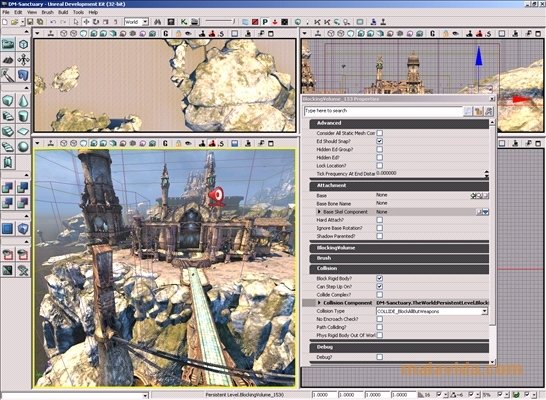
Level design involves just as much artistic judgement and compositional skills as any other forms of design. Perhaps even more so. There are many things that have to be considered differently compared to other forms of work and therefore it is slightly more difficult to get composition correct. You have to take into account that this will be a playable level, therefore there are thousands more factors to be considered, because a player can walk anywhere, can look anywhere, so its difficult to know what will happen. You have to think about how certain objects could be interactive, how certain pathways may be blocked for whatever reason. You have to keep them interested in playing the game. For example, if there was a single room and a corridor leading out of it, and then that’s all for that level, you go through the last door at the end and then get a loading screen, that would have been quite a boring stage in a game. So instead, breaking up pathways can make it more interesting, block certain areas and make it an objective to unblock it, either by throwing objects out of the way or finding a key, or blowing something up. You would need to make sure that tasks to be completed are indicated, but also not blindingly obvious. For instance, if a level is quite big, in order for the player to not get lost, you can use light to lead them through the level. Even certain colours of light could mean different things. Objects placed in a certain way, plus lighting can make an area more interesting. It could entice the player to explore more in that place, if that is the desired effect. Perhaps there is something important there to pick up. But at the same time it can’t be too obvious because then there would be no challenge, and that is the main concept of games. They have to be fun and challenging, and a level that has a big sign saying walk forward and go through here would be rather boring! 

Let’s say you have made a special side room, with bright blue lights, and they are highlighting a key card on a table, while you may assume this to be enough to lead the player’s eye to that point, but they may not be interested. Depending on where the door to the room is, they may decide not to explore that part, regardless of lights. Perhaps they decide to go a more linear path because they want to get out of this area. And even that feeling of wanting to leave could be down to the composition and atmosphere of the rest of the level. If there was no incentive to explore at any point, then likely the player will not. Another thing that could be more difficult to consider is that what draws one person in, may not draw in another person. But obviously a level cannot be designed to a specific person. Therefore, you have to go with averages and mediums.
Most developers will make alpha versions of the game and have testers play through it. These would be very basic versions, perhaps only whiteboxes of the layout. But this would allow the game to be tested early on, before the rest of the game is put in. It’s a great way to see if you have the levels designed in an effective way. Feedback from the testers at this stage is invaluable. 


Task 15: Elements of game design Part Six, Visual Composition.


One of the key things to consider for composition in games is the player’s perspective. The way elements are based in the level will all come down to how the player looks around, how you want them to react in your world. This of course is a difficult task, since you do not know how someone will play a game. Everyone sees the world differently and has different motives and feelings. Therefore, you have to consider these factors while designing the composition of a game. 

Another important thing to consider is where you want to place important elements, like hero assets or things to pick up. They must be placed in such a way as to show off their purpose. For example, for a hero asset, a key element in the game, you want the player to discover it in the best way possible. They could walk out of a small confined space like a cave, and then it opens up in a burst of light to the wide expanse of the outside world, and in front of the player could be a giant mountain or a tower. Those kinds of series of events lead up to that point, and it can only be achieved by carefully placing the elements in the game to create these effects. 

The way composition develops is important, whether its within a 3D game environment or a 2D concept piece, it is always a key thing to consider. With regards to 2D work, let’s say that you are going for an interview, looking for a job in the games industry, and your portfolio has many 2D pieces within it. One of the key things they will be looking for is your artistic skill, defined by the composition of your work. Factors that will be examined will range from the colours, to focal points, to objects in the scene, right down to how the overall piece works and where the viewer’s eye is led throughout each individual work. These will be the things they look for to decide whether you have the technical skills and good artistic judgement. These things will land you a job if they are obvious in your work. 

As for 3D work, the main things still apply. You have to consider the objects in the scene, perhaps it’s a level, you have to also consider the focal points, the way you want to lead someone through the scene, is it crowded and confusing? Are there too many objects and clashing colours and themes which could be causing the area to be too crowded? While it is nice to have some form of a visual feast, with many points of interest, you have to be careful not to go overboard. If you go over the top with objects and lights etc., you risk making a busy scene, which would not be pleasing to viewers, and it would also not portray very good compositional skills. There must be order to the chaos. If you find this order and balance, the composition will work and it will make your art look all the more interesting because of it.


Thursday, 8 December 2011

The Machinist and Paris, Texas.


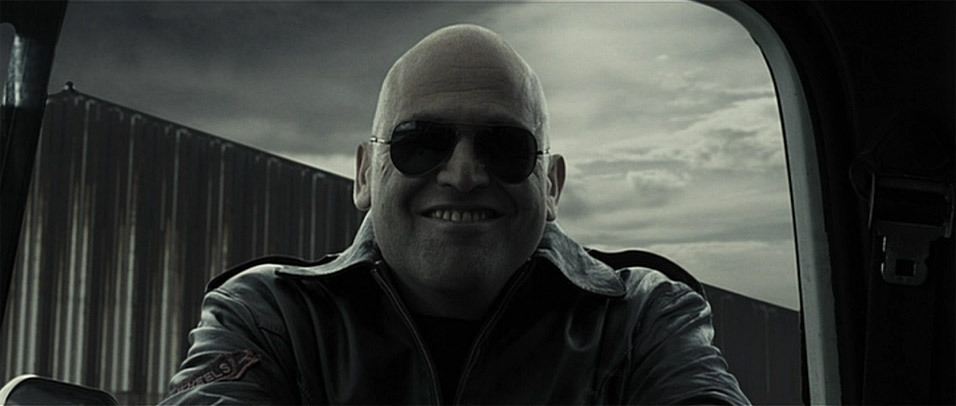
I think the Machinist was a very clever and unique film. I felt that it was quite depressing and yet interesting. All the scenes were very dark but well thought out. There were very specific details in certain moments, like the cigarette lighter suddenly popping out. That suggested to me that it was the point where Trevor kind of snapped, and then there was the appearance of Ivan. Throughout the film, certain things begin to show their relevance and towards the end you discover what is truly going on. It’s a revelation to find out the causes of Trevor’s hallucinations, caused by his severe guilt that has been suppressed for so long. Ivan was a representation of Trevor’s sub consciousness. And in the end, the only way he found peace and was able to sleep was when he turned himself in for the hit and run he was responsible for. The scene when Ivan distracted Trevor and the accident was caused, that seemed almost like a warning from Ivan, that if he continues to hide his guilt and the truth of his crime, more people will get hurt. Overall, a very interesting film.


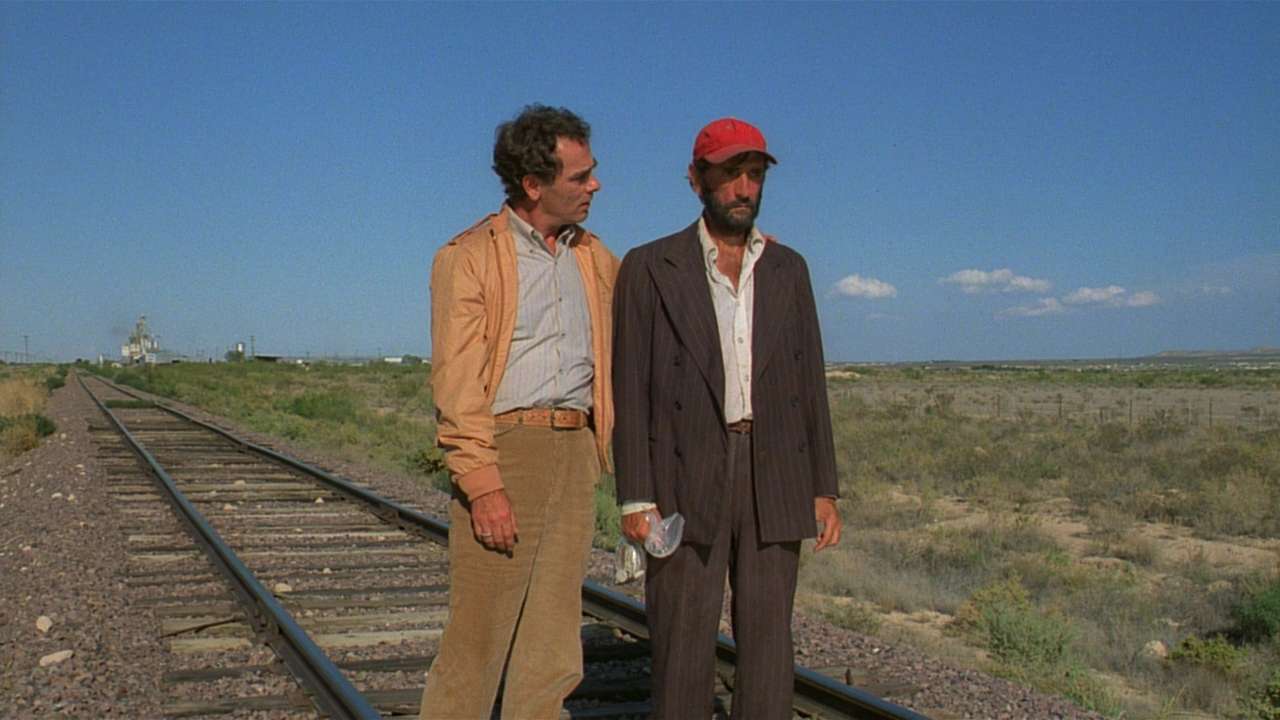
Paris, Texas was another unique film. I think it had some wonderful filming and photography elements. It showed the deserts of Texas in a lot of detail. There were a lot of shots with contrasting colours, like the bright blue of the skyline and the dusty yellow and orange hues of the desert. One of the first things I thought that stood out so much in the film was Travis’ red cap. It looked especially odd in the desert, such a bright colour, and he himself stood out from the place considering what he was wearing and the fact he was alone in the wilderness. Also another interesting point, when his brother turned up, he was wearing a bright yellow cap. So they were in stark contrast to each other. From the start of the film, you are kept wondering when Travis will speak, you constantly wonder what happened to him and where he is trying to go, but we are kept in the mystery for a long while. I think this was done so that we would not only be interested in Travis as a person, but also feel his brother’s frustration. I thought the themes that the film had were pretty interesting. It was like a constant journey and the city and desert will in contrast with each other. The film goes full circle and the story is always leading ahead to the conclusion. 

Tuesday, 8 November 2011

Task 14, Elements of Game Design part 5

Planning and Concepting

To produce successful outcomes in any project, planning and concepting is always needed. The planning and concepting is only going to work if it shows the process and development from initial ideas to the finished product. Initial thoughts need to be developed and worked on within technical constraints to evolve into more solid ideas that lead to the final completed project. The outcome should always be through a series of progressive pieces that will, in succession become the desired or required outcome. It should not be achieved by random and incidental activities. This process is used in the game industry as well as other industries as well. It is the best way to formulate ideas and get results.

The Making of Assassin’s Creed:
In the initial production of Assassin’s Creed, the art team went out and got references of the time period from museums, like blue prints, historical descriptions and objects. They wanted to make the game look as close to the time period of the crusades as they could. But while also keeping true to the period, with the style and architecture, the characters and other parts of the game, it was all portrayed through a modern high graphic medium, so keeping the balance was key. A lot of research was done as part of the planning process. They had a definite plan that they wanted the game to be set in the third crusade, in the Palestine.  They also wanted the environment to be beautiful, representative of the time period while also being fully open to exploration. They had to make it so that every building was climbable and that the player could go anywhere and view the area from any angle. These initial plans led to the finished game which was very historical and yet unique, the environments were very detailed and period specific and the gameplay was immersive and fluid.

The Making of Gears of War:
Surprisingly, one of the main focuses from the start of this game was the main weapon, the chain saw gun. Cliffy B wanted this to be in the game, and fought a lot to make sure that it was. There was some controversy to the violence of it, but once it was accepted, it became some what of a trade mark. Also, they wanted this game to be pretty cinematic, with realistic shots and movement. They used a lot of motion capture for sequences. The results were very visceral gameplay, with sharp graphics, believable motions and gory fight scenes.

New Tomb Raider:
This trailer was used as a “turning point” literally brining a new light to the Lara we have seen over the years. For this game, they wanted to go back in time, to a younger Lara, showing how she became the tomb raider we know. The idea was that it would be interesting to show her transition from an aspiring archaeologist to a survivor and fighter. This is a good story for the game, and quite unique compared to the other previous titles.

Year 2, Semester 1, Task 13


Reflections and Ambitions

I’m very happy to be back at university for the second year. I’m looking forward to this year and I hope to do well.
Looking back at year one, I believe I have learnt a lot of skills, and that they will help me through this year. In year one, I’ve been given the tools to work through the second year, and now I know that the input from the tutors will be less, and I’m expected to work more autonomously. 

This year I hope to manage my time carefully throughout, and complete projects on time with no rushing. I know that time management is going to be very important since there is more expected of us this year. Also, there is a shorter amount of time to work on the projects in Game Production, so it would be best to make a schedule of tasks to complete and set my own deadlines for certain points. If I manage to do this well, it will be an invaluable skill for the final year. 

My ambitions for this year would be to improve on everything I learned last year, and to develop new skills as well. I also plan to perfect the way I approach projects and assignments, and also think about them in terms of the workplace. I know that I need to think more about how what I learn now will help me once I have finished the course and hopefully find a job. I am working towards being a contributing person in the game industry and I look forward to influencing future games.
I am confident that I have the fundamental skills to do well in this year, I just need to use them well and apply them accordingly to my studies. I hope to develop the skills I have acquired so far to improve my work and to learn to use them in more advanced ways. 

One of the things I learned from the first year was that if I don’t get the work written out in set goals, its easy to get lost in what you should be doing next and how long you should be spending on each thing. For my gladiator, I ended up spending an very long time on modelling the head, and restarting the head several times. After I had it finished, I realised that I left myself even less time for the texturing. So, if I write out what needs to be done, and also give it a weighting and order, depending on what it is exactly and how much time should be spent on it in relation to other things, it will make completing tasks a lot easier. Time management is definitely an important skill, and essential for the remainder of my course and then in the work place. 

In conclusion, I believe I am capable of doing well this year, and I am confident that I have learned a lot from my experiences throughout the first year. I hope to improve on my skills and learn to work more autonomously and also manage my time accordingly and consistently throughout the second year.

Wednesday, 4 May 2011

Year 2 Group Presentations:

I really enjoyed the 2nd year group presentations. I wanted to see what the finished levels were going to be like. Especially since I have been here I kept seeing little parts of the projects every now and then whenever the second years were working in the labs at the same time as us.  I had seen several assets they were going to be using, and I saw a some people from the groups play through their levels briefly.
I also wanted to get a feel for what we will be doing in the next year.  I am really looking forward to the group project.  We were given some advice from the second years, and one of the best ones were that we should start learning UDK right now. One group said that they decided to book a room in the library and figure out how to use UDK all together. The program does look quite complicated. And I remember when Mark, when he was our guru, was showing us some basics of UDK, he seemed to go through it extremely fast, and I was very lost from the start!
One thing that I thought was quite interesting from one of the levels I saw was the use of particles. They had turned their version of the Queens building into a science lab where test subjects were kept. In one room, there was all this radioactive kind of dust floating around.  I moved very slowly and glowed bright blue, and it looked fantastic in the darkened room.
I thought that all of the projects had the Queens Building uniquely represented. I thought it was interested how they modified the building to suit their levels’ design. The train animation I saw in one group was really awesome. And they told explained to us why they used a lot of influences from Half Life 2. And it was because Michael had seen their level and told them it was boring! Which was funny.  I could see how the teams had all worked together to make assets and light the level in interesting ways. Each group was very unique in their designs, and they all took different approaches to the project. Some spent a lot of time concepting, and others wanted to get straight into making the level basics.
One thing I learned from one group was that they had difficulties because they didn’t have a leader. What they found was that because there wasn’t one person in charge in particular, they all seemed to do things in their own time and not particularly organised or scheduled.  So basically they said that it would be better to have a leader. But on the contrary, another group said they worked fine without a leader and preferred it that way.
When it gets to the group project, I hope that everyone gets along. I saw a couple of arguments and noticed a bit of tension between a few people. Obviously there had been a few fall outs and disagreements, but this is something kind of expected within a group project. There will be differences in opinions, but hopefully things like that can be resolved quickly enough.
Overall, I was really glad I went to the presentations; it really helped me to get some idea of what’s coming up in the second year. And it also was very entertaining and educational!

Films: Sky Blue and Scott Pilgrim vs. the World

I had never heard of the film Sky Blue. It’s an anime film, set in a post apocalyptic style future. I thought it had some really interesting ideas and some pretty nice art styles. I liked the design of the giant protective city the higher class lived in, also the flying vehicles they used within the city. Although the film was quite slow at first, and we all had hysterics at the randomness of the final scene, I still thought it was a pretty good film. I think it had some nice art direction; there were some very interesting characters, and the lighting and colours in different areas, for example within the technological areas and the skies were quite beautiful. The story was ok, but maybe not very well thought out, particularly the end. It was as if they had quickly thrown in every possible event all together to try and make it more dramatic. And yet they forgot to give more detail on why starting this machine would just randomly fix the whole world in seconds.

I had seen plenty of trailers for Scott Pilgrim, but had never seen it before. I really liked the film; I thought it was funny and creative. It was cool having a comic book style in certain scenes, like with the writing and exclamations. Also the fight scenes were pretty dramatic and definitely game like. The main character wasn’t what I would typically think of as a hero, but by the end of the film, he definitely was. They made the scenes so that he was put through trials to prove himself. When I had first heard about the film, I didn’t think I would like it much and now I’ve seen it, it wasn’t what I was expecting. I would definitely watch the film again.